




Episode 416
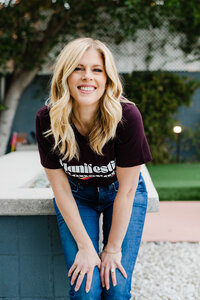
What happens after you survive the unimaginable — and life expects you to simply move on? In this episode, 1/3 Emotional Projector Jessica Buchanan shares how being kidnapped and held hostage in Somalia became only the beginning of her true story. She opens up about the long and often unseen process of “surviving survival” — rebuilding identity, trust, and purpose after trauma — and how she transformed that journey into a mission to help others do the same.
Jessica reveals how learning her Human Design as a Projector gave her permission to rest, release the pressure to hustle, and finally trust her own rhythm. Together, she and Nicole explore what it means to stop forcing outcomes, let life unfold through alignment, and find the courage to redefine success on your own terms.
This conversation is equal parts raw and empowering — a reminder that healing isn’t about going back to who you were, but about honoring who you’ve become. Whether you’re recovering from burnout, heartbreak, or a major life shift, Jessica’s story will show you that purpose can rise even from the hardest moments, if you’re willing to see yourself differently.
Don’t miss this episode — listen now!
Links:
Learn more about your Human Design and get your full chart for free at https://www.nicolelaino.com/chart
Connect with Jessica:
– Visit her website at www.jessbuchanan.com
– Follow Jessica Buchanan on Instagram @jessicacbuchanan
– Her Book will launch October 27, 2025! “How to Survive Survival: A Guide to Turning Life’s Hardest Moments into Meaningful Contribution for the World.”
Be sure to visit nicolelaino.com/podcastlinks for all of the current links to events, freebies, and more!
If you enjoyed this week’s episode, I’d so appreciate you doing a few things for me:
- Please subscribe to the podcast on Apple Podcasts, Spotify, or wherever you listen!
- Rate and review the podcast on Apple Podcasts.
- Tag me @nicolelainoofficial on your IG stories with a story of you listening to the podcast and I’ll make sure to share your post!
Interested in learning more about working with me? Click here to learn more about how we can work together.
Transcript
Episode 416:
Nicole Laino
Hello, and welcome to Unshakable with Human Design. I’m your host, Nicole Laino, and I am here with a friend, someone that I’ve wanted to have on the show for a long time. She is a remarkable woman. When you hear her story, you’ll be blown away. Everybody is, because it is the real story, a survivor story that has a happy ending. But I think the reason that I wanted to have her on is not just because of that story, but because of this transformation that I’ve watched her go through and how every day, seeing her step more and more into this light that she holds for everything that she is, it’s so authentic. It’s so her. What she helps women do as far as writing their stories and memorializing their story, kind of owning it.
Nicole Laino
I can’t think of anybody who’s doing that better that I’m aware of that I’m in contact with, to actually being that example of really holding that light, of owning your story and owning who you are. And she’s someone I’ve talked about on this show before. Because you’re one of those famous cases, Jess, of having thought you were a Manigen and you discovered that you were unveiled. I dropped a bomb on you, and I was like, you’re actually a trajector. And it was such a funny thing. And I loved how you really embraced it. And not everybody does. You were just like, you know, what if I accepted this as true? What would happen? What would that do? And it’s not just the human design thing. It’s what I saw you go through after you.
Nicole Laino
I’m not giving human design the credit for this, but since I met you, I have watched you just step into, like, the bigness of what a projector can be. And I think that’s something that’s a misconception, too, is projectors are like these. Like, they’re meek or leaning back, and it’s like, not at all big energy.
Jessica Buchanan
Yeah.
Nicole Laino
And I’ve just seen you. And now with this new book that you have coming out, how to Survive Survival, A Guide to Turning Life’s Hardest Moments into Meaningful contribution for the world. I saw that, and I was like, now’s the time to have you on the show. I really want you to talk about this journey that you’ve been on and to share your story. And when you hear her story, you’re going to be like, oh, wow. Because there’s really nothing like it. But I actually think it’s so much more interesting after that, what you’ve been through and what you’ve grown into and what you’re helping people do. So, Jessica Buchanan, welcome to the show.
Jessica Buchanan
Thank you. It’s so great to be here. Yes. I mean, human design has very much changed my approach to how I view myself and how I show up in my professional life and my personal life. I was joking before. I take a lot more naps now, and I feel okay about that because projectors need to rest. And that also makes me feel better when I kick my snoring husband out of bed and say, but projectors need their own space to sleep, to restore their energy, you know. And so I use it maybe in some ways as a bit of an excuse, but at the same time, I think the thing learning about being a projector, for me that was so significant was that oftentimes we’re guides.
Jessica Buchanan
And so I’m a teacher by profession, and which is really where I guess, that interesting part of my story and begins. You know, I have many ways in which I label myself. I’m a wife, I’m a mother, I’m an entrepreneur, a CEO, a teacher. But I’m also a kidnapping survivor. And so 2011, I was working for an NGO and international NGO in Somalia. My husband and I met in Nairobi, Kenya, a few years before that when I was teaching in an international school. And he. His organization had moved him up to Somalia and northern Somalia to be based, to do a development work, humanitarian work. And, you know, teachers always find work. They always land on their feet.
Jessica Buchanan
So I quit my teaching job and moved up there with him and sure enough, started working for the un, Started doing work for the Ministry of Education and Armed Violence reduction, which is not something I knew much about until I started learning and started traveling all over East Africa teaching conflict management strategies. Mine, risk education, firearm safety, just community safety in general in these very interesting cultures, not these nomadic societies. A lot of them were low literacy or no literacy. And so my job was to use my teaching skills to basically learn, teach these people who are living on the fringes, right, how to stay safe. They’re living in areas that are still inundated with landmines or unexploded ordinances. Little kids would be getting hurt. And so that was my job is to make those messages accessible in terms of keeping them safe.
Jessica Buchanan
So it felt like very gratifying. It felt very fulfilling. It was hard and I was far away from home, but I really felt like I’m a very purpose driven person. I’m guessing that has something to do with being a projector as well. And it was great until it wasn’t. Which in 2011, October 2011, I was sent by my organization down to the southern part of Somalia to go do a staff training with my colleague. And I was only supposed to be there for three days. Made it to the third day, were leaving the training and our vehicle was overtaken by armed gunmen. We were subsequently driven out into the desert where were forced to participate in a mock execution. And then were held for 93 days for a $45 million ransom demand. And were kept outside in deplorable conditions. We were starved, were beaten.
Jessica Buchanan
We, you know, we lived outside the entire time. It was horrendous. You know, sometimes, you know, I talk about this a lot. I tell this story a lot. And of course, as time goes on, you know, you start to forget. And my husband and I were watching a show last night on Netflix called Hostage, and he was like, are you sure you want to watch this? I said, yeah, I think it’s fine.
Jessica Buchanan
And there was a. I don’t want to be a spoiler, but there was a great moment where some of the hostages were, you know, rescued, essentially, and were laying in bed and we both just grabbed each other’s hands and held onto each other because it was like, even after all this time, you know, those just like watching some stupid show, like, it still feels very much like, oh, I know, exactly the relief that those people are feeling right now. And so 93 days, by order of President Obama, SEAL Team Six, the US most elite military force, parachuted into the desert in the middle of the night and successfully rescued me and my colleague Paul. Then I like to say, like, that’s where the second part of my survival story begins, because I had no idea. And I don’t think.
Jessica Buchanan
I just don’t know if it’s that we don’t talk about it enough or maybe we just don’t have enough. I don’t know if we don’t have enough research about it, but there is really this space of surviving survival that happens for those of us. And we’ve all experienced trauma to some extent, but for many of us, you know, if you’ve experienced a death or the loss of A dream or a job or what? You fill in the blank. None of us escapes the human experience unscathed. It’s that space where you feel like you should be over this by now, and you’re not because you’re still surviving, but you’re not surviving the trauma anymore. You’re surviving survival. Wow. That’s been the longest journey of my life. And that’s what this book is about.
Nicole Laino
So talk to me a little bit about surviving, survival. So you’re rescued by SEAL Team six. Everybody thinks that, like, oh, great, now you just. I don’t think anyone thinks you just go on with your life, but there’s huge gap in time between that. What inspired you to write this book? Cause you wrote a book about your story of being a kidnapping survivor and what that was like. And you know, the whole story of everything that you just told us. And you’ve been touring speaker on that book and you know, I, I believe you’ve spoken at like the UN and you’ve, you’ve had all of these opportunities that have come from that and you help other. Is it exclusively women that you work.
Jessica Buchanan
With for writing right now? We are starting to branch out that right now. Just women. Yep.
Nicole Laino
Because you have your publishing company where you publish memoirs, anthologies of women writing their story and owning their story. Does that feel like one chapter in itself of you having to own that story? Like you wrote the book. Did you feel like you owned it after that? Or was there so much more work that you didn’t even realize was needing to be lived or worked through after?
Jessica Buchanan
I think impossible odds. While it’s considered a memoir, I would consider it more so just an account of what happened. And so I think like immediate aftermath. You know, it was a very high profile media event. Of course you have Obama involved and you’ve got SEAL Team 6. They’re the same seals that killed Osama bin Laden. So very high profile. And so I don’t think I knew which story to tell. I didn’t know what was my story. I was telling the story that I thought everybody wanted to hear. And so I had to work through this like, damsel in distress narrative because absolutely I was in distress. But it took me a really long time to understand that there can be more than one hero in a story.
Jessica Buchanan
And you know, the classic like narrative, the hero’s journey only really teaches us to write one in. But what I think I’ve been able to do is write in 2 and 3 and 4 and 5, because there are a lot of heroes involved in my story. Thank God, right? Because teamwork makes the dream work. And my. My situation is the ultimate teamwork. I wouldn’t be here if that weren’t true. I think, for me and what I have found and really what this next book is about, which. This will be my fifth book because I’ve written many or been the lead author of several anthologies in between. But what I’ve really tried to unpack and articulate is that when we experience something really hard, there’s often a loss of identity, and then there is, along with that, the loss of purpose or a perceived loss.
Jessica Buchanan
And so when I came back from the desert, 150,000% happy to be alive, grateful to be reunited with my family and my husband, I didn’t know who I was anymore. I didn’t know what I could do, what I was qualified to do. My particular situation came with a loss of my job. I was no longer able to go and continue doing what I had. So I had worked so hard to get there, and then it was just, poof, it was gone. I lost my home. We had to relocate back to the US which, you know, my husband is not from this the US and so that was difficult. And then all of a sudden, I’m having a baby, which everybody was like, oh, how amazing. And I’m like, I’m not so sure about that.
Jessica Buchanan
So then you got that secondary loss of identity, and then this. And so I really struggled. I really wandered. I think understanding I was a projector, if I had understood that earlier, might have been very helpful for me, But I’m better late than never. But I think that, yes, it’s in that space of the now, what that really gets people stuck. And what I have attempted to do with this offering is I’ve interviewed 20 people who have been through their own crises, and I highlight how they have chosen to turn their pain into contribution, their horror into contribution. And some of it’s big. Some of them have created nonprofits, and then some of them have made a career change and decided to become massage therapists. You know, so I try really hard to cover the whole spectrum, women and men.
Jessica Buchanan
And I’m really proud of the people in the book, and I’m proud of being in this space and learning what I’ve learned so that I can offer this.
Nicole Laino
And I should say you’re 13 emotional projector, and you’re on the cross of rulership. I think one of the things that’s interesting about that is that it inherently comes with, like, power struggles, and there’s leadership in that. I think you have led yourself through all of these stages that you have been in. But when you were explaining, like, that loss of identity. It is. I think that’s something that people take for granted is the fact that, like, I can’t go back to being Jessica before this happened. Like, I don’t even. Do you just let that even feel like the same person?
Jessica Buchanan
Yeah. And I remember when I write about this, I remember exactly when I came to that realization. You know, I tried to go back to teaching, you know, and I was. I was teaching in a, you know, a Title 1 public school. I had a really cool teaching job. I was, like, teaching outdoor education. Like, it couldn’t have gotten any better. And I was sitting at a stoplight coming back from the grocery store, and I. It just hit me. I can’t go back and do what I used to do because I am no longer. I have been changed on a cellular level. So the person I was before, some of the things are the same. Like, yes, I still like garlic bread, and, you know, yes, I love the ocean. Those things haven’t changed. But my stress level, intolerance has changed because of ptsd.
Jessica Buchanan
The things that I used to believe were so black and white are now very gray. And what I want, who knows? That’s such a moving target all the time. But what I feel like I can give to the world has changed. Because I’m a mother now. Yes. And because I’m a person who carries around complex PTSD in this experience. And so there’s so much grief, and then there’s probably. It’s. I think it’s Is the stages of grief, but. Right. That new. That newly added stage to the acceptance, the denial. And the acceptance is meaning. And so when you get to a place, what I really hope people understand is when you’re standing there and you’re on the rubble of your life, you can still make something beautiful from that. You can still create something meaningful. Things take the time they need to take.
Jessica Buchanan
There is no hack. There’s no shortcut. But I do believe that you can turn your pain into something purposeful. If you want to, you don’t have to, but it’s an imitation.
Nicole Laino
It’s a choice. Yeah, for sure. And I think that, like, that identity shift. We’re all experiencing identity shifts. If you’re growing and you went through something traumatic that probably forced you to go into this next version of you know, we think about the next version as always being like, oh, it’s better. It’s higher. It’s like most of us walk through some kind of fire to get to that next version of ourselves. Or we find ourselves sitting in this moment saying, I don’t know why I’m not connected to everything that I’ve always been connected to before. There’s not always like a, you know, large scale traumatic event like you experienced. But I do think that is a very human experience to, if you’re paying attention.
Nicole Laino
I think some of us are so busy and we compartmentalize and we avoid and detach so we don’t feel those things. Like, I’ll just stay busy. I’ll just keep going. I’ll just be. And then, you know, like your husband cheats on you or something happens. You’re like, oh, wait, yeah, then you have the identity. So sometimes it’s the event that forces us to change.
Jessica Buchanan
Well, isn’t it all. I mean, I was just talking to my sister about this. Like, why is there always the big stuff that forces us to make these changes that we probably should or wanted to make, but we wait until it’s like really major. And maybe that’s just me. Like, I don’t move until I’m forced to move. You’d think I’d like start learning that lesson a little bit more quickly. But I agree completely.
Nicole Laino
I think it’s one of those things, you know, they say, like, you know, it starts as a whisper, but it’s so easy to ignore a whisper and then it becomes a knock and then it becomes banging and then eventually it kicks the door down. You know, it’s your choice when you answer the call and you know, some of them will require more courage to make a choice that maybe you don’t think, why do we wait? I think it’s because sometimes we’re so scared of making the wrong decision or making the change. What if we choose wrong? And I think that’s one of the things that people look to human design for. And I think that’s one of the things that I hope to correct in the thinking, which is that human design doesn’t guarantee that nothing will ever be uncomfortable in your life again.
Nicole Laino
In fact, it’s probably going to drive you into discomfort because it’s going to take you away from what you always felt was safe or your regular mode of operation. And it’s going to drive you to something else. Now, something else might better. It might not look better right away or it might cause some things to fall apart because you changed course. And I think that’s probably why we don’t listen to the whispers. Why we don’t change sooner is because we’re afraid of things falling apart. Don’t rock the boat, you know the devil I know.
Jessica Buchanan
Yep, absolutely. And I think, too, like, we’re afraid to trust ourselves because we’ve been conditioned for generations to not to listen to the voice of reason or, you know, practicalities are more pragmatic or logical. And sometimes those whispers are not logical or pragmatic at all.
Nicole Laino
Exactly. So what has human design helped you with, outside of napping, which I’m very.
Jessica Buchanan
Happy that you’re doing, because, I mean, I’m gonna take a nap.
Nicole Laino
Prescribed naps. But what else has human design allowed you to trust yourself? Because at least from the outside looking, and I know that you and I have kept in touch, but we’re not, like, talking all the time or anything like that. But from the outside looking in, it looks like you are trusting yourself more. But how has it changed you from your perspective or what? Has it shifted for you?
Jessica Buchanan
Yeah, I think, like, from a really practical perspective, professionally, I don’t feel like I have to force things anymore, which is very liberating. And I’ve been practicing a lot, so I’ve lost that or, you know, it’ll resurface every once in a while, but I don’t feel like I have to make things happen. And so there is this, I think, steady or trust within myself. And, you know, I’m a person who’s like, rejection is protection. And I really believe in the universe has got my back. And so when it comes to, like, clients, for instance, or like, prospective authors, I’ll have a call with someone. Maybe they’ll be very interested in working with us. And then for whatever reason, a lot of times it’s just about resources.
Jessica Buchanan
They decide that you don’t hear from people, and I don’t know if they deal with this, but, you know, you get all the. Or whatever, maybe I’ll follow up once. And then I don’t hear from people, and I’m like, that’s okay. Like, you know, I don’t need to, like, chase people down if it’s not my issue. Bless and release. And the same thing with clients who can be a little sticky. You know, I can tell, like, from the very beginning, before we even sign a contract, if it’s going to be a problem. And I’m like, I just feel much more secure in saying I don’t think that this is a good fit. And I’m not worried about the loss of income or, you Know the. Whatever else could happen. I just trust that all I have to do is.
Jessica Buchanan
Is show up, put our offerings out there, put our work out there, show up, be on podcast, interviews, tell my story. And then I really do feel. And I hope I haven’t misinterpreted this, but I really do feel like it’s such an easier way for me to operate.
Nicole Laino
It should be. It should be. Particularly for projectors. What I think so pleasantly surprised me about you and the way that you took to this, because you just really were like. You’re like, I’m mani. Jen. I’m like, no, you’re not. You’re a projector. And you were like, that blows my mind. But okay. And you seemed to slip into, like, you got rid of the podcast that you were on. You got a bunch of things. Like, you were like, this is. It seemed like you took it as permission to cut the fluff 100%.
Jessica Buchanan
I was doing all kinds of things that I didn’t want to be doing because I felt like I had to be forcing things.
Nicole Laino
People ask me all the time. In fact, somebody I have to write back on Instagram wrote me. She was like, well, how do I quit my corporate job and work three to four hours a week without, like, losing all of my income? And it isn’t about the three to four hours. Sorry, not three to four hours per week. Three to four hours a day. It is.
Jessica Buchanan
I was like, yeah, how do you do that?
Nicole Laino
How do I not work at all?
Jessica Buchanan
Yeah, no, but, like, the three to.
Nicole Laino
Four hours a day, it isn’t so much about, like, clocking that. It’s about looking at your life and saying what isn’t necessary that I have made feel like I have to do. But that’s really because of somebody else’s model, not because I really feel like this is what I’m supposed to be doing. And you did that without really much prompting. You were like, yes, I got rid of the podcast. I remember you sent me a voicemail. You were like, I just wanted you to know this is amazing. So I just got rid of this. I got rid of this. I’m only doing this. I’m just doing the publishing. Like, I’m just doing the books. That’s what I want to be. And to me, that was like, that’s what you wanted to be recognized for. Like, this is who I am.
Nicole Laino
And that’s the most important thing for a projector is like, who do I want people to see me as? And then if I’m just that thing that projection Gets super strong, and, you know, you’re like, I’m a survivor. This is my story, and I can help you tell your story. And it’s like, that gets to be like a super strong tractor beam. When you’re scattered and fragmented, that diminishes and you work harder to get everything. Did you find that people, more of the right people were finding you when.
Jessica Buchanan
Oh, a hundred percent. I mean, I think too, like, after all of that, I did just start showing up and telling my story, particularly on social media, Instagram, and everything just blew up like it was, you know, in my ordeal. Happened really before Instagram, but, you know, and then it was so cool because all I had to do was just show up, tell my story, or if I had a thought on my mind or anecdote or whatever. And then all these women started finding me. And one of our offerings is we do these. We work with a cohort of women once a year and. And we walk them through the memoir writing process as a group. And. And we pick a theme and everybody writes.
Jessica Buchanan
And, you know, so it’s a really cool offering, but, like, how do you reach 20 women at a time for, you know, to fill these spots? And it was just like. All you said was, like, you just have to keep showing up as your authentic self. Now the problem is if you don’t know who your authentic self is, and that’s a lot of hard work. That’s a lot of digging deep. And I think I had done a lot of that work, and I was primed and ready to just show up because I finally knew who I was, I knew what I wanted to say. And like you said, like, it’s growth, it’s evolving, and so it’s always changing. And so who I was, you know, two years ago, I’m different. And now I. I’m starting to dream about other things. It’s super exciting.
Jessica Buchanan
Instead of, like, overwhelming and making me afraid and exhausted, I’m like, oh, I can show up as that. Yeah.
Nicole Laino
And, you know, from your lips to God’s ears or to every listener’s ears, that what you said about you had done the work. You knew who you were. You had to. You were forced to. We’ve. We covered this. You had to do that work. So what that created for you was when human design comes in and tells you just have to show up as who you are and. And be the lighthouse, go step into the spotlight, own it, and claim your space. You were like, oh, I can do that. I know who I am. I know what space I want to claim, I’m going to get rid of everything else. So I think that some people expect human design to be this magic, like, silver bullet. And it can be when you’ve done a lot of other work.
Nicole Laino
For me, I had done a lot of work, so human design kind of clicked things into place. I hadn’t done as much work as you did at the time that I found it. I was still sort of finding a lot of that, but it allowed me to find it. But a lot of people won’t go through that work or they’re disappointed when it doesn’t happen instantly.
Jessica Buchanan
Yeah.
Nicole Laino
And really the big differentiating factor right there is the work. Have you done it already? And you’re coming in at, you know, one of the last chapters of the book, and we’re just closing it out and shifting you into, like, the third act? Or are you coming in questioning a lot? And you have some soul searching to do before you can ground into these things. And human design can help you do that, but it still might take you some time to find that alignment.
Jessica Buchanan
So, like, I’m curious, like, how often do people come to you that are in that state that they still need to do some of the work? Oh, often, yeah.
Nicole Laino
Very often.
Jessica Buchanan
Yeah.
Nicole Laino
Because they’re questioning a lot. It depends on the stage that they’re at. But I get a lot of people who are. Things haven’t worked and things have been really hard and they’ve struggled, and they’re looking for human design to be kind of that framework that helps them get their footing. And I tell them, I’m like, if you do the work, I promise you that it can provide that for you.
Jessica Buchanan
Yeah.
Nicole Laino
But if you’re not willing to do the work, then I don’t want to take your money. Because it’s required. Because it’s required. It’s sort of like, I want to write a book. And it’s like, well, will you write? You know, it’s a path that you walk.
Jessica Buchanan
Exactly.
Nicole Laino
And so I tell everybody, where can they find out more about this new book that you have coming out? It comes out in October. Right. Is it October 27th? Is that the date? So October 27th. And then you also have ways. If someone listening is a. An aspiring writer and they’re looking to be published, you also help women get published and published.
Jessica Buchanan
Absolutely. Yeah.
Nicole Laino
So tell them about those two ways of connecting with you. Sure.
Jessica Buchanan
So you can always find out more about my story and what I’m up to at jessbuchanan.com and then SoulspeakPress.com is our website for our publishing company. We’re a non traditional publishing company for women who’ve been through something. Now they know something and they want to teach us something. And so follow us. Soulspeak Press or @jessicacbuchanan on Instagram. We’re always, we’ve always got something going on. Now we’ve got a writing retreat next year in Italy. Like, I mean, there’s just constantly stuff that we’re putting out. So it’s super fun and I don’t think I’d be here if it weren’t for you. So thanks, Nicole. Thank you.
Nicole Laino
I don’t know if I deserve that much credit.
Jessica Buchanan
Please receive it. It really has made such a huge.
Nicole Laino
Difference in my life that means more to me than I could even say. And once again, the name of her upcoming book is how to Survive A guide to turning Life’s hardest moments into meaningful contribution for the world. We will link everything up in the show notes for you so that you can get the details on that. You can order this book, pre order it please, and then stay in touch with Jess on Instagram. She has a wonderful feed over there where you can see her brand really in action. @jessicacbuchanan on Instagram. Thank you so much for being here.
Jessica Buchanan
Absolutely. Thank you for the invitation and allowing Jess to show up.
Nicole Laino
I appreciate you. Remember, in order to have an unshakable business, you must first become an unshakable human. So thanks for letting us help you become unshakable with human design. We’ll see you next time.