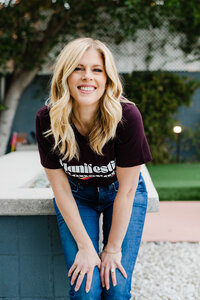





Episode 417
Have you ever wondered why you keep attracting the same kinds of relationships—or why certain dynamics show up in both your personal life and your business?
In this episode, Nicole sits down with Jessica Baum, a 2/4 Pure Generator, licensed psychotherapist, and bestselling author of Anxiously Attached, to unpack the hidden patterns that shape how we connect, love, and lead. Jessica shares insights from her upcoming book Safe: An Attachment-Informed Guide to Building More Secure Relationships, and together they explore how understanding attachment theory can become a roadmap for healing and creating more fulfilling connections.
Through heartfelt stories and clear explanations, Jessica breaks down the four main attachment styles—secure, anxious, avoidant, and disorganized—and shows how these early patterns influence our adult lives. She explains how attachment wounds live in the body, shaping our nervous system responses and influencing the way we handle love, conflict, and even success. Nicole brings in the lens of Human Design, connecting the energetic and emotional aspects of our patterns to how we show up in our relationships and careers.
Jessica and Nicole also talk about what true healing looks like: learning to feel safe in your body, finding supportive relationships that help regulate your nervous system, and honoring the coping mechanisms—or “protectors”—that once kept you safe.
If you’ve ever felt stuck in repeating cycles or longed for more ease in your relationships, this episode will help you see that transformation is possible.
Listen now!
Links:
Learn more about your Human Design and get your full chart for free at https://www.nicolelaino.com/chart
To download the Secret Podcast on how to Build & Scale Your Business with Human Design click here: nicolelaino.com/secretpodcast
Connect with Jessica Baum:
– Visit her website at https://jessicabaumlmhc.com/interview
– Follow Jessica Baum on Facebook https://www.facebook.com/@beselffull
– Don’t miss Jessica Baum’s upcoming release, Safe: An Attachment-Informed Guide to Building More Secure Relationships, out October 28.
Be sure to visit nicolelaino.com/podcastlinks for all of the current links to events, freebies, and more!
If you enjoyed this week’s episode, I’d so appreciate you doing a few things for me:
- Please subscribe to the podcast on Apple Podcasts, Spotify, or wherever you listen!
- Rate and review the podcast on Apple Podcasts.
- Tag me @nicolelainoofficial on your IG stories with a story of you listening to the podcast and I’ll make sure to share your post!
Interested in learning more about working with me? Click here to learn more about how we can work together.
Transcript
Episode 417:
Nicole Laino
Hello and welcome to Unshakeable with Human Design, everybody. I’m your host, Nicole Lano, and I am here with a very special guest. You know that I only bring you guests that actually serve what you come here to this show for. And I was so excited when I got this person reached out to see if she could be on the show because Jessica Baum is a licensed psychotherapist. And when I read your bio, Jessica, I was sitting there and I’m looking at what drew you to your work.
Nicole Laino
You know, it says in your bio that, you know, your journey began with a lifelong curiosity about the whys of life and why we feel, connect and experience the world the way we do. And that you specialize in trauma, attachment theory, and interpersonal neurobiology. That’s so near and dear to my heart because I took a different path from psychology in a formal way. I was an actor and for all of the same reasons. Why do people do the things that they do? Why do people behave the way that they behave? What would make somebody do this thing? And thinking through that always was what drew me into my work. So I felt very much a kinship with Jessica when I read this in your bio. She’s a certified addiction specialist. She has advanced training in emdr, experiential therapy, CBT, and DBT.
Nicole Laino
And her best selling book, Anxiously Attached, Becoming More Secure in Life and Love, has established her as a trusted authority on healing attachment wounds and building secure, fulfilling relationships. And your new book, Jessica, welcome to the show.
Jessica Baum
Thank you for having me.
Nicole Laino
I’m so happy to have you here. Your new book is called Safe though, correct? That is the new one that is coming out with. What is the date that your book drops?
Jessica Baum
October 28th.
Nicole Laino
Fantastic.
Jessica Baum
Safe. An Attachment Informed Guide to Building More Secure Relationships. Yeah.
Nicole Laino
So what did I not cover in that bio? Welcome to the show. Did you want to introduce yourself to the audience? Is there anything that you’d like them to know before we kick off? I have so many questions for you.
Jessica Baum
No, I mean, I’m just a psychotherapist who, like you said, studies interpersonal neurobiologies. I specialize in couples work. I run a team of people and we focus on healing attachment wounds and helping people get More conscious and have more fulfilling relationships.
Nicole Laino
It’s such deep work. And I think once you see attachment theory and attachments in relationships, you can’t unsee that. It’s one of those things that I’ve found to be so eye opening and interesting because I was saying to you before we started recording on the show, we get a lot of entrepreneurs, we get a lot of founders, we get a lot of people who are in business and they come here to understand how they relate in their business. Because entrepreneurship is never just about the business. You are the business. Your stuff is going to be the business’s stuff. So it’s best for you to clean up your stuff if you want things to run smoothly in your business. And I have found that codependency exists in businesses. Attachment theory exists in businesses.
Nicole Laino
These attachment relationships, our relationship with our business, I think can be, usually mirrors a lot of the relationships that we have in our lives. So I’m very excited to talk with you and have this conversation around what you do and what you found with people just in relationships. Tell everybody what attachment theory is and what attachment styles are.
Jessica Baum
Yeah, so attachment theory is like the studying of connection. And it’s a really well studied science from the 1950s. And so it’s how we adapt to our primary caregiver. And there are four different categories. Although in my book you understand like you can have many different. I call the wheel of attachment. You can move in all these categories, but they’re secure, anxious, which I wrote the book anxiously attached, avoidant, which is on the other end of the spectrum. And then it’s called fearful, avoidant or disorganized. I refer to it as disorganized and safe because that’s the scientific word. But depending on how your primary caregivers were connecting with you and the sense of safety that you had. And I go into deep depth. We store these patterns inside of us.
Jessica Baum
So like if you’re anxious, you’re always kind of living with some fear that the shoe is going to drop. The hallmark is uncertainty. If you’re avoidant, sometimes you can feel smothered in relationships or you can the fear of losing yourself. If you’re disorganized, you really struggle with being close and being apart. Like you struggle in different ways depending on what patterns you have internalized from your earliest experiences. And they live in your nervous system and they show up in your adult life in your romantic choices, but absolutely also in your relationship to your business, in the relationship to anyone who’s close to you, who’s important to you. Your adapting way of staying in connection or dealing with conflict or fear will show up in those primary relationships.
Nicole Laino
And then if you look into like what the behavior looks like, this can look like. If you are avoidant, then you might find yourself distracting yourself from things. You might look to get away from closeness, you might look to get away from responsibility. I think it’s helpful if we can let people know a little bit about what that looks like in their daily life. How would they know that they have anxious attachment style? How would that play in their everyday life?
Jessica Baum
Yeah, like I said, anxious. The homework is uncertainty or unpredictability. So you’re feeling like the shoe is gonna drop. If you have anxious pattern that’s dominant. You have a conscious fear of abandonment. So you usually know that’s somewhere in your history. You tend to overextend yourself because your parent came in and they weren’t co regulating with you enough in the way that you needed. You usually leave your body to regulate your primary caregiver. So you’re more likely to self abandon as an adult. And you’ll know like for example, like I know what my dog needs sometimes before I know what I need. Like you’re very sensitive to, you know what other people’s needs are.
Jessica Baum
Because when you were younger, in order to stay in connection, as someone who developed more of anxious base, if your mom was sometimes stressed out, sometimes available, you’re always attuning to her. So you’re leaving yourself and you’re attuning. And I mean, I don’t like the word codependency, but anxious attachment would be more of a clinical word of how you adapt it and why you need to stay close to others in order to feel safe. And that conscious abandonment wound up the other side of the spectrum. A true avoidant. And there are things called avoidant protectors which are different than true avoidance. But avoidant babies, their parents didn’t emotionally show up at all. They physically showed up. They might have checked the boxes, but they weren’t emotionally connected to their child.
Jessica Baum
So the child learns that like I’m not going to get my emotional needs met. Performance and success are more important in this system. Maybe mom or dad is there, but they just don’t know how to attune in that way. So they grow up and they tend to be more independent and struggle with empathy and learning some relational skills. That’s a true avoidant. And remember, all of this is on a continuum. And this nuanced and I explained the Attachment wheel in the book so that you get an understanding and then fearful or disorganized is an infant that got stuck in cycles of my parent is scary. Either they’re completely checked out or they’re violent or angry.
Jessica Baum
But I need them anyway because in order to survive as an infant, we must stay in connection so these individuals can get stuck later in life, like really deeply longing for closeness, but also being scared of that closeness at the same time. So, you know, everybody’s different. We can store pockets of disorganized. We can have avoidant protectors. We can show up more anxious in our romantic life, but more avoidant in our work life. Right. And so it’s very nuanced and it’s very complicated. But these patterns are very well researched and it’s a very well documented science. And when you start to understand them, I think it like creates like some conscious awareness and some understanding. And then you can start to obviously work on healing the patterns.
Nicole Laino
And do you ever see people shift from or display multiple attachment patterns? Do you see people that have, in some situations avoidant and in some situations more anxious or disorganized? Can someone move disorganized? Sounds to me like, and maybe this is just my own way of hearing it, but I’ve always thought disorganized sounded like a more extreme sort of state where there’s sort of this jumble of things that’s happening. Am I incorrect in thinking that or. Because it’s almost like I could see someone going from disorganized to maybe one of the others as a step in the quote unquote right direction.
Jessica Baum
Yes and no. I mean, yes, I think that if you’re looking at the wheel of attachment, which isn’t safe, secure is down here, anxious is over here, avoidance over here, and on top is disorganized. As you move up the anxious, like as a parent becomes more and more anxious, maybe angry and rageful, we get slip into disorganized. As a parent moves up the avoidance scale and maybe checks out completely and is neglectful, we get up to disorganized. So as you move up the size and you increase the avoidance or the anxiety, you get up to pockets of disorganization. Now, with one parent, you can have secure experiences, anxious experiences, and sometimes disorganized experiences. In one romantic relationship, you can also move within the wheel as well. So but we typically can say, oh, my dad was avoidant. He wasn’t emotionally there for me.
Jessica Baum
But, you know, maybe there were these occasions where he connected deeply for some Reason with me. And I have these secure pockets or I had a pretty secure childhood, but like my parents forgot to pick me up one day and I had this experience where my body got lit up and I got really scared. And there’s just this little pocket of disorganization. So it’s like we have different experiences and then attachment is a two way street. So it’d be like, Nicole, your attachment system and my attachment system meets and then our relational dance has its own way of doing its dance together. So if you’re more avoidant, I might show up more anxious. If you’re more anxious than me, I might show up more avoidant. It really depends. It’s so nuanced and it depends on who we’re attaching to.
Jessica Baum
But usually we pull in people or recreate our familiar in certain situations. So if I had a very avoidant father, I might be attracted to very avoidant men. Right? Because that’s my familiar. And so that’s what we tend to gravitate towards.
Nicole Laino
It’s like you read my high school diary, you know, I felt like when I started to hear about these theories, it made so much sense to me because I just said this to someone today. I was like, oh, yeah, I dated my father. Not literally, but I dated somebody exactly like him. And for many years from like my high school boyfriend. And we kept dating on and off into my early 20s. That was a learning experience for me. And I think I was able to find how insecure I was through that relationship to understand that this pattern needed to end. Sometimes a pattern needs to be so overt in your face in order for you to see it. And I didn’t know anything about this work back then, but then it’s very funny.
Nicole Laino
Then I became someone actually in hr, in my corporate job when I worked on Wall street, and I burned out there. She was the one who really opened me up to the idea of codependency in like a. Which is really just unhealthy attachments, insecure attachments, that codependency. She gave me a book on codependency that was out then. And I read it and I was like, oh my God, this is what I’ve created here. I’ve created this validation system just looking for this elusive love that was. That I’m chasing constantly. It was the avoidant. It was that feeling of like, I need this in order to feel whole, in order to feel safe. Only you never feel safe because it’s never quite there. It’s fascinating. So you talk about like how they can use this to heal.
Nicole Laino
What does that healing process look like from the perspective of your book and what you take your patients through?
Jessica Baum
Yeah, I mean, that’s such a good question. I mean, I think there’s a lot of, like a lot of literature out there right now on attachment theory and, you know, understanding the styles. But I don’t think there’s anything that quite explains what does it mean to heal an attachment wound. And I talk about it at length in the book. But our attachment system wounds live in our body, in our gut, in our heart, in our fascia, in our nervous system. That’s how we store memory. And I dive deep into like the memory systems and how sensations are memory and how we store sensation as memory when we’re young. And this memory is always with us. It’s always scanning our environment. It’s always letting us know if we’re safe or we’re unsafe. And it’s based on our experiences.
Jessica Baum
So if I grew up with a really avoidant father and you do something like you check out on me right now, my system might light up and say, oh my God, this isn’t safe right now. Because Nicole, who I’m depending on right now, is not connected to me in this moment. And we’d have to have a close relationship probably for this to get to activated. But my system would remember all this feels familiar and this feels unsafe. So we would start to see where we get lit up in our work relationships and our intimate relationships. What is our body telling us? What parts of our body are being activated or shutting down on us. And then we can start to understand, like how are these patterns showing up in our adult life and when did they start in our early life.
Jessica Baum
And we kind of can make the connection between the two. And healing attachment patterns means we go to the core of the wound. So if it’s abandonment, we meet it. If it’s shame, we start to accept it and we start to hold the original experience and receive from another nervous system what we didn’t get at the time. So we’re witnessed and we receive what we didn’t get. So that wound can start or that memory system can start to change. And so in the presence of a safe relationship and in the context of healing and building interoception, starting to understand our body and the way that wounds are stored in our body. Through the safety of you and I, we can re experience things. We can go into the body, we can hold these things and we can neural nets open in our body.
Jessica Baum
Our system gives us More streams of information and we can start to move things out of the body up into the right hemisphere and integrate into the left. So I very much unpack the science of healing attachment wounds because I think it’s important to note this isn’t just woo, this isn’t just like heal your inner child. This is how memory is stored. This is why our body is speaking to us. And let’s not keep repeating these painful dynamics. Let’s get ahead of them and start healing them.
Nicole Laino
Yeah, it sounded to me like what you were describing is like somatic therapy. Feel the feeling. Is that kind of what you were talking about?
Jessica Baum
Somatics for sure, yeah. I mean being in your body, being embodied, having an embodied experience of what you went through and kind of getting in touch with that.
Nicole Laino
Right. And I see this with, like I said, when I work with entrepreneurs, I’m working with the whole human. It’s such a holistic way because it’s. I can talk to you about your messaging, I can talk to you about your business, but if you’re in flight, that’s usually what’s creating the problem. It’s not a strategic issue that we have. A lot of times it’s an energetic issue or an emotional issue that’s causing people to not operate as the best version of themselves. Not go after what they want because they are afraid. Where does that fear come from? And I always find that, you know, the best path is going through the feelings. What don’t I want to feel? What am I afraid to feel? What am I feeling right now?
Nicole Laino
And something that was coming up for me as you were talking and you know, talking about these different ways of them expressing and how do we heal? This is, you know, I noticed that a lot of people will almost use some healing modalities as like a crutch that it’s almost a way of avoiding the feeling because that doesn’t feel safe. So it’s like they run to like, I teach breath work and I have, you know, I do eft. And some people will use that almost like a crutch, Almost like, you know, well, I tapped six times today and it’s like, well, why are we tapping six times? Let’s come back to like, what are we feeling here? And so much of it is that it doesn’t feel safe to feel the feeling. So I’ll do anything but feel this feeling.
Nicole Laino
And I will be grabbing at all of these different tools. And sometimes the tools can be a way of avoiding the feeling that themselves as well.
Jessica Baum
Yeah, I Mean, in chapter three, I talk about protectors, and I think that we need them. We all need ways to avoid what’s going on inside. And I would never take someone’s protector away from them. But in the presence of safety and someone who can help you feel, which likely this person didn’t have that as a youngster and doesn’t even know what that experience really is like. But through experiencing what’s going on in your body together over and over again, you will need your protectors a lot less. And in the meantime, if you need your protectors, whether that’s going for a run or glass of wine at night or smoking your vape, like, I get it, we all have protectors, whether we’re conscious of it or not. And thank God we have them, because often feeling is too hard.
Jessica Baum
And it’s definitely too hard for individuals who don’t have the experience of being joined in their feelings and need to avoid. To protect themselves.
Nicole Laino
When you say protectors, explain that a little bit about what protectors are. Are they coping mechanisms or are you looking at them more from like a. An internal protector?
Jessica Baum
Well, protectors are anything that we do in order to help us cope and survive with what’s going on. And some of them are glamorized. Like, we could work out a lot, and some of them are not, like, you know, using drugs or alcohol, but it could be going for a run. And it’s not to say that these things are bad or good, but when we’re struggling with what we’re feeling inside and we reach for something or we do something to try to just help ourselves in the moment, it’s considered a protector. Some people hate their protectors. Like, I had a client before this, and one of her protectors is her eating disorder. Right. Or someone’s ocd. And, like, it’s hard to, like, reframe it, but they can feel like they’re making us miserable.
Jessica Baum
But the truth is, they developed in a way to protect us from something deeper around core wounds. And so until we have the right support and really can go there in terms of feeling the original wound and understanding that they’re working really hard to try to protect us, and we need them in place until we’re ready to kind of re. Experience and go there.
Nicole Laino
Yeah, it’s almost be grateful for the tool or for the thing that the part of you that kept you safe all of these years, that allowed you to keep going and keep living your life and be, you know, the member of society that you’ve been like, you got here. Congratulations. And these parts of you allowed you to do that, these protectors?
Jessica Baum
Absolutely. Workaholism. I talk about it in the book. It was on my protectors. I don’t know if I talk about it. I have a client who was sexually abused, and she couldn’t talk to anyone. So she started smoking pot at like, 12 or 13. And my first response was, thank God you had the pot. Because she had no place to go. She had no place to process anything. Yes. Okay. Addiction kind of followed her later. And we had a lot of work to do. But, like, we develop these things in order to cope. And the last thing we need to do is, like, beat ourselves up for the ways in which we’re coping. But we need to start to see what are they really protecting us from. That’s the question. Yeah.
Nicole Laino
And I think that we tend to think about these things from, like, you know, that it has to be sexual abuse or some sort of, like, big T trauma. But small t trauma is just as valid. And we all have it. We all have something. It’s just, you know, were we raised in a place where we felt majority, safe and secure most of the time? But, like, I think back to you bringing up smoking pot and stuff. Like, my teenage years and the stuff that I was doing, it was these were outlets for me to feel like I could come out of my shell. I felt like I walked on eggshells all the time. I felt like I was so careful, and these were a way for me to be free.
Nicole Laino
And what’s very interesting about, like, the journey with those things, you know, I know some people, addiction issues. I fortunately didn’t have that. I think it was because I did work and I didn’t need them anymore, and the relationship to that protector changes. So I think that’s a similar thing to what you’re talking about. And it’s important for people to know that there’s no shame in this work. I really do think that this is the way that we’re finally all getting comfortable having these conversations. I think they’re being more accepted on a wider level now to recognize that we have stuff and we want to live a more free life. And freedom comes from security and safety in our body.
Jessica Baum
And if we didn’t get enough of secure holding when were little, we walk around the world feeling scared and anxious. And so we must heal that by re experiencing safety and security and re internalizing that as inner anchors.
Nicole Laino
Yeah. I look at my husband, and he has very secure attachment for the most part. Like, he’s just sort of a grounded guy, good dude. No one’s perfect, you know, I’m not saying that he’s Mr. Perfect, but he just has a sense of self. And I think that his parents, you know, gave him what he needed throughout his life. And my parents had stuff going on, you know, largely my father and I look at how my husband has allowed me to find safety in my home, in my body, in my life. And so much of that is physical touch. So much of that is just, you know, like, when I have a bad day to go and hold him and to feel safe enough to say, you know, I’m feeling scared right now. I’m feeling what I’m feeling right now.
Nicole Laino
And to feel that method with understanding and love and acceptance versus, you know, feeling like you shouldn’t feel that way. Buck up. You know, that’s why when I’ve gone through the attachment styles, I’m like, I feel like I’ve had moments with all of them. I’ve had times with all of them. What is it that you find most common with people as they’re going through this journey? Because I know that people are listening to this show right now, and they’re listening to us talking about and they’re trying to figure out, where do they start with this. Obviously, your book is going to take them through all of it, but, you know, and again, the book is called Safe. What if somebody is sitting alone in their home?
Nicole Laino
What if somebody actually feels alone because you were saying physically having another nervous system to help regulate you? What if they don’t feel like they have that?
Jessica Baum
Yeah, I mean, so that’s a problem in our culture and society. And I talk about that in order to heal early attachment wounds, what was wounded in relationship needs to be healed in relationship. And so I’d be misleading your audience if I said, you can buy my book and all the healing in the book. You know, you can heal yourself in your apartment alone. That is just simply not how the science works. And so I talk about finding your anchors in the book, and I talk about what you need. And it doesn’t necessarily need to be a therapist or a coach, but it needs to be a person in your life who is nonjudgmental, who can hold space.
Jessica Baum
I talk about the science of what holding space really means through nervous system holding and can hold space for you as you step into this work, and that you need to have these disconfirming experiences. You need to have people in place in order to heal very early attachment wounds. You Might be able to heal later wounds a little bit more with inner child work as you get further down in the work. But the earlier wounds have to be experienced by another nervous system in order to move them. And I think, you know a lot of people, you know, I write self help books and it’s like we live in a world where it’s like help ourselves. The truth is like true healing happens when we have true interdependency like what you described with your husband.
Jessica Baum
He is secure enough for you to have internalized some security within you. You don’t need to do it in a romantic partner. I actually did a lot of my healing with a therapist and I also have friends and clients who find anchors. And if you go through your Rolodex, I talk about in the book how to co anchor for people so that you can do this work with other people. If they’re not too dysregulated, you can find co anchors. But the healing is in the sharing and the re experiencing and the getting in touch with your body and the somatic work. And it just isn’t done alone. You just can’t really do it alone.
Nicole Laino
Yeah, I have found, and I don’t know if this resonates for you, but I’ve found sometimes in my own practice, like with the clients that I work with, some people feel so alone that they can’t see the potential for connection around them. And they’re not exercising the opportunities for connection because the wound is so deep and taking that first step can be so hard and feel so terrifying, honestly. And I noticed that I use human design to kind of help me deliver the message and of what maybe someone needs to hear. So like you’re a 2 4. Pure generator is what we call it. And the 24 is like your profile. And yeah, then generators. Two fours are generally, you know, they tend to keep to themselves as a personality type, meaning they’re the hermit.
Nicole Laino
They kind of get energy through sort of their alone time. But on the opposite side we have a four where connection is necessary. They are social beings, but it tends to be more of like an unconscious thing, this social connection. They know they need it, but their outward personality sort of says, like, now I’ll just stay home. But the four, every line, every number has kind of a shadow to it. And the four shadow, the wound of the four is abandonment, is this feeling of being abandoned. And that cuts so deep. We can all have an abandonment wound. But for a four to have one, it goes against. Opportunities come through people. Opportunities come through trusting People and trusting that they will help you. And if that fundamental is broken, then that wound cuts so deep because it feels so core to them.
Nicole Laino
And I find that it can be very difficult for a lot of them to trust again and to lean on communities or on safe spaces. What do you do if you find a client or a patient who is resistant to making those connections?
Jessica Baum
Yeah, I don’t know if that actually describes me. Believe it or not, I think I am actually really good at reaching out. But it does describe more of an avoidant attachment, I would say someone who wants connection badly but really struggles with the vulnerability of reaching out. And, you know, maybe I’ve experienced that a little bit in my life, but the truth is, I’m, like, the first one to raise my hand and say, I, like, need help. So I don’t know.
Nicole Laino
You know, that’s a high expression of this. You know, that’s someone who’s in a good place. It gives us a mechanism to say, this is what a shadow expression looks like, and this is what a. A higher expression looks like. And where do you fall on that spectrum? And then something to work with. It sounds like you are in a place with your four where you’re like, no, no, I’m good. Like, I know that people are sort of the lifeblood of my life.
Jessica Baum
Yeah. And I mean, people who have anxious attachment as their primary or default, they tend to reach out for help even when they don’t need it. So we’re the first ones to raise our hand where people who are more avoidant tend to, like, sit back a little and really struggle with the vulnerability of reaching out. And I have experienced that too, in my life. I would say even with some of my clients, like when they’re in a regressed place or they’re struggling, sometimes they’ll just send me a text, and I’ve experienced this, and I’ll just send a text back and I’ll be like, I’m right here. Like, I’m with you. I might not be in the room with you. You might not have internalized me yet. You might still feel alone in this experience.
Jessica Baum
But just that limited connection helps them feel like they’re not alone in this regressed place in their life. And I truly believe we need that in terms of healing. We need to know that the people that we’re depending on are there, even if they’re not perfectly there, even if I’m not available all the time. Like, I am holding energetic space for you, and I am here with you, helping you. Re Internalize what secure attachment feels like.
Nicole Laino
Yeah. And I think it’s important to let people know what the landscape looks like. Because if this is your first step into this, it might take a little bit of time for you to start to feel safe enough to ask for the help to if you’re avoidant, that sometimes people think, I’ll read a book and I’ll feel better, that will be it. What do you usually see with people as far as, like, the way that they approach the work? When you see somebody have a lot of success with healing their unhealthy attachments or unsafe attachments, what does that look like as far as. I don’t want to say how much time, but what do you. What are marks of success for you where you see people who take to the work really well versus the ones who struggle to really show up for it?
Jessica Baum
Yeah, I have people who, quote, unquote, struggle and like five years later are in the work. Like, everybody’s just where their system needs to be. So I never like to look at it through that lens, but I feel like if I am working with someone and we’re kind of going into the work, they’re usually getting dysregulated, but they’re also gaining some conscious awareness of their memory system and actually what it felt like to be little. Not just a logical understanding, but like, starting to get into it. An embodied sense of what it felt like to get to belittle their reflex response time changes.
Jessica Baum
So after a period of time, with enough co regulation and holding space, they can have a witnesser in them that sees different parts of themselves, that communicates differently, that’s in touch with their body and isn’t as reactive in the world. So, like, you know, as we’re working together, there’s just more space and compassion between what’s coming up in or out of them and how they’re reacting to it and the choices they have when those experiences are showing up. And so that’s a usually good indicator. Like, I can tell you. Like, I have one client, I saw her today, and she’s up and down in the beginning as memory is coming up. But, like, she has more space in her body, she feels more alive, she’s got more life force.
Jessica Baum
And so it’s a rollercoaster ride, but there’s more life force kind of coming towards her. So sometimes the re experiencing is really hard, though. I mean, that’s why they call it the work. Like, it’s not easy, but if you’re listening, like, it’s not supposed to be done alone. And I think I put so much science into safe. So I think understanding the science kept me grounded as I moved through the work. And it kind of is this extra support to know that, like, you’re not crazy if you’re feeling all these things. This is what’s happening in your body. And the science just helped ground me as I move through my own inner world.
Nicole Laino
Yeah. I love that you brought up, you know, that people are where they are, and, you know, you just have to honor and respect where you are in this moment and that the work is the work in front of you. The reason I asked is I know that there’s somebody listening to this show right now that feels like they should be further along, that, you know, oh, I’ve been healing forever. It can feel like. And a lot of times I can find that they’ve just been battling that avoidant attachment or that anxiousness that they’ve found another way, another mechanism to kind of avoid or to go into. They’re getting triggered into fight flight, and they haven’t progressed enough in the work to be grounded yet. They haven’t felt safe.
Nicole Laino
And I find a lot of people look to put, like, a time frame on this type of work, and there just isn’t one.
Jessica Baum
Yep. I think that, you know, if you’re listening, what I think you’re talking about, Nicole, is that people are like, here I am again, or, here’s the same theme showing up, or, how could I have made the same choice again? And that’s happened to me as well. I don’t really know a person that it hasn’t happened to, But, I mean, this is essentially why I wrote the book. Like, we have core wounds. We will repeat them. We will recreate them in our life over and over again. And it’s. It’s really frustrating because we will go out into the world depending on our wound, and we will look to confirm it. See, she doesn’t love me. See, he’s too busy for me. Right. And we will keep confirming these belief systems of I’m not worthy or I’m not lovable or I will be left.
Jessica Baum
And, like, it’s not manifestation. It’s literally our fears attracting what we know and then recreating it. And if you’re listening, we’ve all been there, myself included. Healing it means that we have to go to the root of it. So, like, if the wound is. I’m. I’m going to be left or I’m unworthy, we have to go to the beginning of when did you feel this? Where do you feel this? Like, we have to grieve, we have to be with the original experience because that experience lives inside of us. And instead of feeling it, we’re reenacting things that we think are protecting us from it. And ironically, we end up feeling it again. So we have to go there and we have to start to be conscious of, like, oh, if my wound is. I will always be left.
Jessica Baum
And I keep picking partners that when their trauma is activated, right. Like, if it’s an avoidant, they flee. Fight, fight, flee. They’re fleers. So then my core wounds, like, look, here I am again with another person who’s fleeing when I’m scared. And that’s because I’m picking people that match the wound. And then I’m recreating it instead of going back and saying, oh my God, I actually was a little neglected in my childhood. I was kind of emotionally left by my parents. No one was really there for me. Can I go to that original experience with someone and actually be with reality versus picking someone who I think is gonna meet my needs and not bring this up in me? And unfortunately it gets recreated and recreated. So I think part of the book is to get conscious.
Jessica Baum
It starts to be conscious of what these core wounds are, where they live, how they’re getting recreated so that we can start healing them so that we’re not stuck in quote unquote. We call it trauma bonds or reenactments, but keep us miserable. Yeah.
Nicole Laino
And I think that we’re just retriggering our fight flight response consistently. And so it becomes this, you call like, it’s a silent sort of pattern that we’re in. It’s a silent. I look at it energetically. I’m like, we’re energetically connecting to this thing that we don’t want. So now we’re going to get more of what we don’t want. I see this with people. When I think about this, I see people who have this relationship with like social media. They’ll almost. That abandonment wound will come up because they put something up and they don’t get the reaction that they want and they feel abandoned all over again. And they feel like nobody likes me, nobody’s responding to me, nobody’s meeting me where I’m at. Nobody is buying, nobody’s engaging.
Nicole Laino
We’ve sort of created this world with social media now where if these strangers aren’t responding to us in the same way. I see that in my work where I see people having old wounds be triggered and then they go and they never. This is where someone is active for a bit, and then they go and they disappear. And they’re always too busy to do the thing that will actually help them grow. And it’s because of an inner wound that they have that they’re not looking at. I always say triggers are gifts.
Nicole Laino
If you can look at it that way and you can look at, like, if I’m triggered to be curious about what I’m feeling versus being critical of myself or just going off in an automatic pattern, some sort of thing that you’ve always done, then you can start to find the pieces of all of this and start to get clues as to maybe where it started or to what you need to do to heal it. You need to feel all of these things and sit with it. That was what I was getting from that somatic. Just trauma gets stored in the body. We have to free it from the body. We have to feel it in. We have to sit with it long enough to say, like, okay, guess what? I’m feeling this and I’m still here. I’m still safe.
Jessica Baum
Yeah. I mean, in the book, I switched the word trigger to awaken or activated so that every time you’re, quote, unquote, triggered, you’re really awakening. A younger part of you is awakening. Now. They can change the relationship to what’s happening in your body. And as this experience is happening in your body, I never look at fight or flight as a bad thing. I look at it as your body is brilliantly adapting to something that’s scary. And I can be with this experience. But there’s a good chance that I might not be able to be with this experience. It might be so dysregulating for me. I might not have the ability to regulate my system. And this is where co regulation comes into play. This is where I’m being activated. And I need someone else’s window of tolerance.
Jessica Baum
I need somebody else’s nervous system to hold my awakening activated parts with me to help me actually understand what they are so that I can learn to be with this. Because my parents never were. Because I don’t actually have the capacity to be here and to sit in it on my own. I actually need the support. And I didn’t even know that’s what I needed. So I’m spinning my wheels constantly trying to say, oh, just sit with it, when I don’t even have the capacity to have a window of tolerance to hold this. And I literally need another person to help me hold my internal world. Because that was something that I didn’t receive as a youngster.
Nicole Laino
Yeah. So what would you say to somebody who is. Besides buy your book, which obviously they’re going to go, do we have it all linked up for you in the show notes. So they’re going to buy your book, but then somebody who is currently on their own, what would your advice be to them? And then what would your advice be to somebody who does have access to. To people, but maybe how do they find the right people to lean on?
Jessica Baum
Yeah, I mean, listen, I’ve done so much work in a relationship. I’ve done so much work out of a relationship. I talk about finding your anchors in the book and what that really means. But it takes one relationship, one healthy relationship that responds to you with their nervous system more in a ventral state of safety that holds your experience. It takes one relationship to change the trajectory of your whole life. So it does give hope. I’m not saying you still need to have a relational experience to transform some of these inner experiences, but it only takes one. And for me, I mean, I did some work with my partner, but really it was my therapist and it was my mentor. And then I grew more experiences because my nervous system started to recognize what emotional availability really was.
Jessica Baum
So I was gravitating towards people who weren’t emotionally available. And then once I started to invite emotionally available people in and they started to hold stuff from space for me, then my nervous system was like, oh, okay, I’m gonna start to recognize this. And then I pulled energetically. I can pull in more of that over time. So I would think that there are support groups out there. Listen, there are a lot of support groups out there, and there are a lot of people in these support groups. And some people can hold space and some people can’t. There are a lot of therapists out there that can’t hold space.
Jessica Baum
So really, you’re looking for individuals who are patient, who are nonjudgmental, who aren’t going to try to fix you, who don’t have a big agenda with you, who can meet you where you are, right brain to right brain, and be with you. Literally be with you. And when you have an experience of a friend or someone in your life who has the ability to sit down on the sofa and say, like, you’re in a bad place, Nicole. And instead of trying to fix you right now, I’m just gonna be with you. And it’s the being with that is the healing. And so when we get into the work, it’s the Being with that starts to heal.
Jessica Baum
A lot of quote, unquote, codependent trauma bond is if this person could just act differently, I might be okay, or if I could fix them or heal them or whatever. But in the healing work, it’s not about them. It’s about can we be with you, and can we reboot these parts of you, and can we turn inward and start to do that? I’m also a couples counselor, and I truly believe that a lot of healing can happen in relationships. And I am an imago therapist. And if you’re listening and you have a partner and you want to find a great couples counselor, I highly recommend imago therapist. You can search them. Imago or emotionally focused couples counseling.
Jessica Baum
Those are the two modalities that I highly support, but that we attract people who have positive and negative traits of our primary caregivers, and that through doing the work together, we can also become conscious and heal. But you do need two willing people, if you’re listening. So if your partner isn’t willing to do the work with you can still do the work with another anchor. And I really kind of dive in deep. And there was a point in my last relationship where were doing the work together, and he decided to. He didn’t want to anymore, and I was continuing to do my individual work, and I just continued. And two things can happen. I could have stayed in that relationship, and his behaviors wouldn’t have bothered me as much.
Jessica Baum
Or I decide that he can’t meet my needs and, you know, walk away from the relationship. There’s no right or wrong, but you always have the agency to do your own work. Regardless, my hope is that you can do work within the context of your relationship that’s bringing up the work. But regardless, you can bring that work to another anchor and start to get in touch of what the core wounds are and what the attachment patterns are that are awakening in this relationship and use that as a portal into your own healing.
Nicole Laino
Sounds like what you’re really looking for is it’s almost like you’re proving to your nervous system that safety exists in another person, that you’re meeting these fears and consistently creating this example of the opposite of what your internalized wounds are saying.
Jessica Baum
Yeah, I think that people want safety, but they usually attract their familiar. And I think a lot of people, when they first experience true safety, are freaked out because it’s so new to them. And the vulnerability that comes with safety is actually what brings up the work. So a lot of people say, oh, I want the nice guy. I want the really emotionally available guy. That guy shows up or that girl shows up and it’s like, I don’t know what to do with that because this is so unfamiliar with my nervous system. This is not what I’m used to. So I’m going to go to what I know, right. And so by picking anchors and doesn’t have to be romantic partners who are emotionally present.
Jessica Baum
By understanding that and by doing the work with them, your nervous system is now learning what true safety is, what true emotional regulate capacity and co regulation is, what true attunement is. And so we need to experience that in some safe container in order for us to say, okay, I need to reorient to this rather than to my familiar or critical partner or critical parent. A tough high intensity chaos. All of those things that I keep finding myself in are my familiar. We need to reorient. And it’s the reorienting that’s actually really hard. And it’s relearning what true safety really is.
Nicole Laino
Yeah, I absolutely did that. I wasn’t able to trust that a guy could be safe for earlier years where you know, I’ve have those people that showed up and they had it all together and there was always a reason why they weren’t right. But the reason was never really made sense. It was just sort of like, I don’t know, there’s just a feeling and it’s like, you know, the feeling was that this is not firing with my wiring which says that it should look like this. It should look like somebody who is emotionally unavailable. It look like somebody who is kind of backhanding compliments at you and making you feel bad. That’s we go to the familiar. It’s true.
Jessica Baum
I wanna say something like I have a tag on my book. So it’s an attachment and forward guide to building secure relationships. But it’s also coming home to yourself and others. And I tell this story in the beginning of the book about this relationship and I like hugged him for the first time and I just felt like I was home. And he brought me home to my childhood trauma. And I don’t have any regrets. I still love this person deeply and I have a place in my heart for him. But he was so much my familiar that I hugged him and I was like, oh my God, I’m home. Which it feels like amazing. And then you know, years later you’re like, oh my God, I am literally recreated my childhood home with this person.
Jessica Baum
So like the irony in all of that is kind of like I Think most people I talk to who come to me, they’re like, why did I do this? And it’s like, we all do it to a degree. Like, we all do it well.
Nicole Laino
Like I said at the beginning, my high school boyfriend, that was basically like my dad, exactly the relationship and exactly the same. He stuck his finger in all of those same wounds. He knew exactly where those buttons were. And there was a reason for that. A long time where I, you know, you can go through the, like, oh, all the years I wasted. What if I wasn’t attached to this relationship? What could I have done? I said no to this because he was in my life. I could do that all day. And I did. I had my pity party and, you know, looked back with longing about, like, what could have been if the sliding doors. I had chosen a different one.
Nicole Laino
But when I look at it, I’m like, I might still be in that pattern if it wasn’t so in my face, if I didn’t see it so clearly. It took a while, but I was also kind of done with at least a lot of that work of facing it and showing me what the path looked like and where I needed to go in my early 20s, rather than it being, you know, I know a lot of people that are still in their patterns, well into their 40s, and there’s no shame in that. But I look back on it, and I’m like, you know, I could be grateful, too.
Jessica Baum
He’s kind of the guy who woke you up, right?
Nicole Laino
Yes. Uncomfortably.
Jessica Baum
I said to my mentor, for your audience, there’s a recording for them about how to move from insecurity to security. My mentor, she’s 82. She studied interpersonal neurobiology, like, years more than me. And she’s fascinating. So I want your audience to have that. But I said to her, like, did I have to go through these hard experiences, devastating experiences, to awaken to my trauma? And she said, no. Had you had a really good therapist early on, or you really knew, you know, some of this, the right therapist would have got in there faster. And so I think that’s kind of why I have the book. Because, like, I don’t want people to spend another five years of their life, or even if you know you’re in the pattern, it’s hard to leave. And the book explains why it’s hard to leave.
Jessica Baum
The book explains why it can take years to leave, but at least you have the information. I remember at a certain point looking at my partner, and I was like, he’s so unavailable in this moment, just like my dad. And now I’m gonna start to make this about my dad rather than him. And I actually detached from the pattern and started to focus on my inner child work. And I remember him, he was like, wow, you, like, took yourself out of the energetic field of this cycle. And I was like, yeah, because this isn’t really about you right now. This is about what you’re bringing up in me. And it totally unlocked us. So I just want people to have these resources so they can get out of these cycles, like you said.
Jessica Baum
Like, so many people are miserably stuck in these cycles, just with no real understanding of how to, like, break the paradigm.
Nicole Laino
Yeah. It’s an unconscious thing, I think, for most people. And even if you’re conscious of it, you’re not conscious of necessarily how many connections it’s making to this thing until you go into the work. So I encourage everybody, please, please go order this book. It is called Safe. You can get everything on Jessica’s website. So if you go to jessicabaumlmhc.com interview, we will link this all up in the show notes so you don’t have to remember that. But I’ll tell you that in case you’re typing, go there because you have some free resources there. The interview that you were talking about with your mentor.
Jessica Baum
Yeah. And then beyond the label, so the attachment reel right away, so you can start to see the wheel of attachment and start to identify with those. You’ll get those in your email box. Check your spam, but you’ll get them the second you fill out the form. And then when you get the book, you’ll have both that and the conversation is what it feels like inside your body to go from insecurity to security. And my mentor, I did none of this alone. I’ve had so much support in my life. I’ve had so much support in creating the books that I have. I’ve been so influenced by the most amazing people. And she’s been an amazing influence for me. And I wanted people to experience her. So that’s why I put that video in there.
Nicole Laino
That’s amazing. I honestly, like, I can’t stress to you enough. If you’re listening to this and you find that you are not getting the results that you’re looking for in your life that you feel like you are fighting yourself. I think there’s usually a deep sense of, like, to me, I always knew, like, the mountain is me, the battle is for me. And if you fall into that category, digging into this work and the way that Jessica’s structured this, I don’t want to say simple because it’s complex, but it’s not complicated. Just the way that she’s broken this down. And to help you understand these patterns in your life and how you can start the process of unwinding them, it’s never too late. And this work will unlock all sorts of windows and doors that you maybe didn’t even know were there.
Nicole Laino
This is the work that started to set me free. So I hope, I truly hope that everybody buys this book.
Jessica Baum
I really appreciate that, Nicole. And I love your story because it deeply resonates and it shows how one relationship can truly help unlock safety. And you had the other patterns and you were able to, like, redirect and have a, you know, a more secure base now in life, which is, if you’re listening, that’s, I think that’s what everybody wants. We want to feel like we have space inside. We want to be expansive and we want to have relationships that truly nourish and sustain us. And getting to that might be a little bit of work. So I’m so happy to have had this conversation with you.
Nicole Laino
Same. I feel the same way. And I think that for those of us that have been on both sides of it, been on the unsafe, and found our way on the safe, there’s nothing that you want more for people than to have them experience what it feels like on this side of what SETI can feel like, because it’s really life changing. So I’m so honored that you came on the show that you shared with us. Please go buy her book, go to the website, buy all the things and grab all of those resources that she has available for you. Thank you for being here, Jessica.
Jessica Baum
Yeah, thank you.
Nicole Laino
And thank you listener for making it to the end of this episode. We appreciate you. And remember, in order to have an unshakable business, you must first become an unshakable human. So thanks for letting us help you become unshakable with human design. We will see you next time.